How Do Solar Panels Work?
A complete guide: How do solar panels work?

Author
Harry Dexter | Managing Director
Table of Contents
Author
Harry Dexter | Operations Director
Table of Contents
How Do Solar Panels Work: A Simple Guide
Solar Panels have become increasingly popular in recent years as many homeowners faced with rising electricity bills look for sustainable ways to reduce their energy spending.
Often, when looking into solar panels for your home, the question will be asked – How do Solar Panels work? The concept is surprisingly simple
In simplistic terms, Solar Panels are designed to capture sunlight and convert it into electricity. When sunlight hits a solar panel tiny particles within the panel start to move. These particles are often made from silicon and when they move they begin to create an electrical current. This current is then directed into your home, business or battery storage to provide power.
Now that you have a basic understanding of how Solar Panels work, let go into a more detailed explanation exploring the technicalities of how Solar Panels work.
A More Detailed Look at How Solar Panels Work
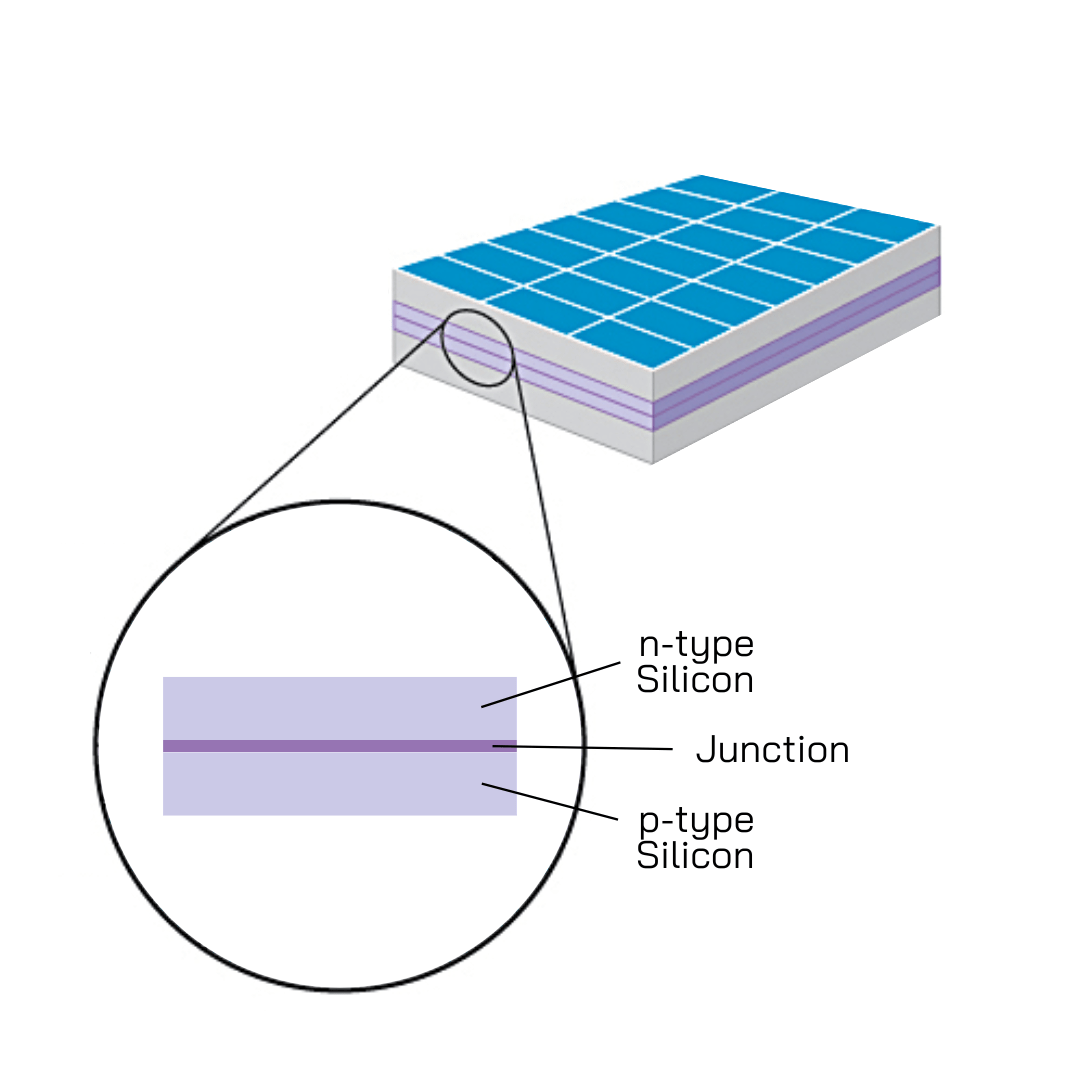
Solar Panels are made up of lots of smaller units called solar cells. Each of these “cells” are usually made up of silicon which is a semiconductor and crucial for the process of converting sunlight into electricity.
These solar cells are arranged to make a panel which is why you’ll see lots of smaller square on a panel. These smaller square are the individual cells.
Absorbing the Sunlight
Sunlight contains little packets of energy called Photons. When the sunlight hits the surface of the salt panel these photons are absorbed by the solar cells. This then causes the electrons in the silicon to “get excited” and gain energy. This energy causes them to break free from their atoms.
Electron Movement
Once the electrons are free from their atoms, they begin to move around in the solar cell. This movement creates an electrical current. The solar cell then needs to harness this electrical current.
Solar Cells are made up of two layers of silicon. N-type silicon which has a surplus of electrons and facilitates the process we’ve just explained. And P-type silicon which has a shortage of electrons and these two types of silicon are crucial to how the cell harnesses the electrical current.
When put together, these two types of silicon create what is known as a “junction”. This junction creates an electrical field that acts as a one way street for electrons. This electrical field pushes the electrons from the N-Type silicon to the P-Type silicon creating a flow of energy.
Direct Current (DC)
The flow of energy creates a direct current (DC) electricity. DC flows in one direction only, unlike Alternating Current (AC) that powers most of your home appliances.
The Role of an Inverter
To make the DC electricity usable in your home, an inverter will convert the Direct Current into Alternating Current to be used in your home.
Electricity Distribution
Once converted to AC, the electricity then flows into your home’s electrical system. If the panels are producing more energy than is required by the home the excess can be sent back to the grid through a process called net metering. This allows the solar panel owners to earn credits or be paid for the electricity they are supplying back to the grid.
In some cases, homeowners elect to install solar batteries that store excess electricity to be used when the panels aren’t generating electricity.
Solar Efficiency
The efficiency of a solar panel refers to how much sunlight it can convert into usable electricity. Higher efficiency panels can generate more power in the same amount of space, which is especially important for rooftops with limited space. Factors like the quality of materials, design of the solar cells, and how well the panel is manufactured all play a role in its overall efficiency.
Will my Solar Panel run out of Electrons?
The Electrons in the circuit flow from the Solar Panel, through an external load (such as bulb or battery), and then back to the solar panel completing the circuit. This continuous cycle ensures that the solar panel wont “run out” of electrons.
Conclusion:
Solar panels have offered a clean, renewable source of power. While the technology behind solar panels can be complex, the basic principle is simple: sunlight excites electrons in the silicon cells, generating electricity that can be used to power our homes and businesses.
As technology continues to advance, solar panels are becoming more efficient, affordable, and accessible, making them a great choice for anyone looking to reduce their carbon footprint or lower their energy bills.
You can read more about deciding on the right panels for your home in our blog – Choose the right solar panels for you home